


DCMAD
How To Protect Yourself
Residents play an important role in keeping mosquitoes under control. According to the NRS 318.118, Nevadans are legally responsible to abate (eliminate the source of) a public nuisance arising from their property, including mosquitoes.
Ways you can help:
• Aerate ornamental ponds and minimize plant growth
• Clean clogged rain gutters and storm drains
• Keep outdoor drains flowing freely
• Dump and drain any standing water
• Clean stock tanks and water facilities every 5 days
Another form of defense against mosquitoes around your property are barrier sprays. These can be purchased from hardware stores and following directions can be used to repel mosquitoes. (show examples) Steps to apply barrier sprays start by:
1. Mowing your grasses.
2. Follow the directions on the bottle and apply early in the morning or after the heat breaks in the evening.
3. Do not water for 48 hours.
Barrier sprays can be used on lawns, decks, trees, shrubs, and any other vegetation.
For yourself, wear long sleeves and long pants when spending time outdoors during the evening and early morning when mosquito populations are heaviest. Make sure doors and windows in dwellings have tight-fitting screens without tears or holes.
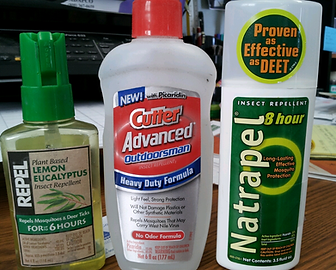
Use spray repellents (show examples) when outside.
The following preventive actions are recommended by the U.S. Centers for Disease Control and Prevention (CDC) to reduce individual risk of mosquito-borne illness:
Apply an insect repellent containing DEET (N, N-diethyl-meta-toluamide) according to manufacturer’s directions. Repellents containing picaridin and oil of lemon eucalyptus also have some efficacy. However, DEET is the best-studied and most-effective repellent available. Try out different products to see which works best for you. Remember to reapply frequently as needed in heavily mosquito populated areas.
Avoid spending time outside when mosquitoes are most active, notably at dusk (the first two hours after sunset) and dawn.
Eliminate areas of standing water; including but not limited to bird baths, unmaintained swimming pools and sprinkler runoff, irrigation boxes, pots/buckets all of which support mosquito breeding. Please recheck your property after irrigation or rain storms.



Equine West Nile Virus It is highly recommended that you consult with your veterinarian regarding vaccination for your horses for protection against Illness.
Canine Heartworm Canine heartworm occurs worldwide. It is caused by a filarial nematode transmitted by Aedes and some Culex mosquitoes that can infect domestic dogs, wild canines (e.g., foxes, coyotes, wolves), and cats. The tiny worms migrate through the body to the heart and cause thickening and inflammation of the heart, which can lead to difficulty in breathing, chronic cough, and vomiting, and can sometimes be fatal. It is highly recommended in this area to contact your veterinarian and follow their recommendations for prevention of heartworm in your pets.